
An estate sale walkthrough is often where you win or lose the house. Families and referral sources want a stress-free sale: a crew that will not create porch chaos, a clear trail for an executor, a contract they can finish in the house, and a close they can understand when the weekend ends.
These estate sale walkthrough tips are how operators book more jobs: listen first, show a brief on-site proof, close paperwork on the spot when they are ready, tell a smooth sale-day systems story, and make a settlement promise you can keep.

What “winning the house” actually means
Winning is not the loudest pitch. It is quiet confidence: we have done this before, we can show how sale days work, we can finish the agreement before we leave, and you will get a packet you can read when the weekend ends.
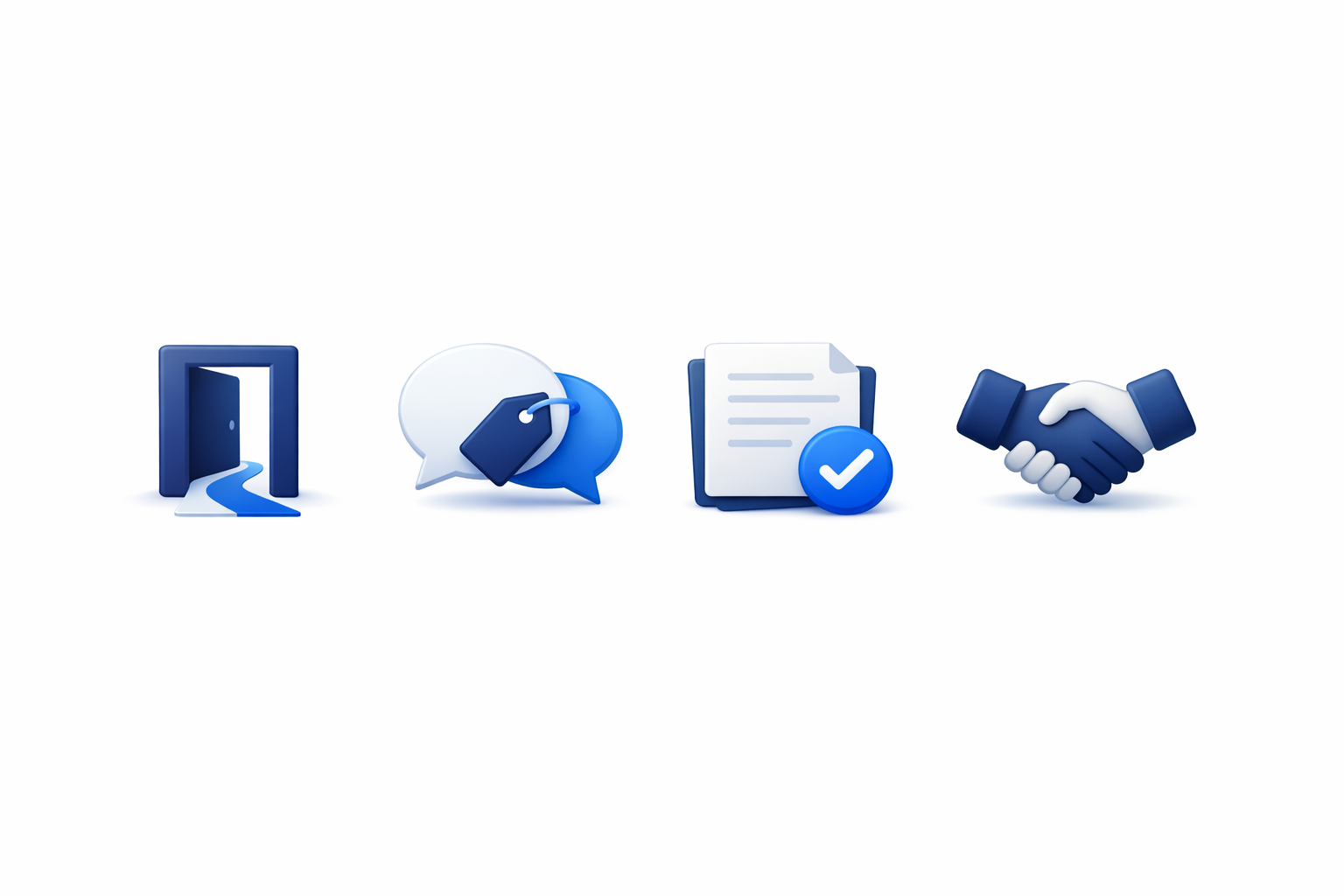
On a walkthrough, prospects feel five things that close:
- Respect. You listen before you price the china.
- Modern proof. You can tag one money item live so sale day does not sound like a clipboard speech.
- A signed plan. When they are ready, the contract is read through and signed on an iPad so you walk out booked, not waiting on Monday email.
- Smooth systems. Door, floor, checkout, and close make sense in plain language.
- Settlement clarity. Transparency after the sale, not only energy at open.
Referral sources (realtors, probate attorneys, franchise leads) forward the operator who reduces risk. Risk sounds like mystery pricing, door meltdowns, unsigned “we’ll send paperwork,” and “I’ll email numbers Monday” with no plan to have clean data.
You are selling a weekend the family can get through, a signed agreement, and a packet that earns the next introduction.
Before you ring the doorbell
Walkthroughs are won in the 24 hours before you arrive.
Prep checklist:
- Know the referral path. Who sent you? What did they promise the family? Do not contradict the intro.
- One-page company story. Who you are, how you run sales, how you settle. Keep it human.
- Hardware ready for a short proof. Charged phone and a compact NIIMBOT B1-class printer. Be ready to photo one item and print a barcoded label, not only to describe it.
- Contract ready on the iPad. Your agreement should be easy to open, read aloud, and sign in the house when trust is there. Do not plan to “email it later” as the default close.
- Questions over speeches. Timeline, family sensitivities, HOA or gate rules, and what “done” means for leftovers.
- No competitor roasting. Compete against chaos: paper tickets, mystery prices, and post-sale reconstruction.
Pride showing a real system beats inventing a perfect one. If you run a modern stack, say so plainly. If you are mid-upgrade, say what you will run on their sale.
On the walkthrough: listen first
Walk rooms with them. Touch less than you talk. Listen for timeline, family sensitivities, and what “done” means. When they ask how sale days work, answer in operator English.
Door and dignity
Explain check-in as accountability, not theater: one door owner, clarity on who is in the house, staged entry when the property needs it. Gated homes and security-conscious families care. Chaos at the porch is optional; early birds are not.
Floor and pricing honesty
Money items get attention; junk drawers get lots. If you use AI-assisted suggestions, frame it the way operators trust: suggest, then you decide. Antiques and “family will ask” pieces get human review. The lead owns the number.
Inventory and pricing happen in weekday prep (usually Monday through Wednesday or Thursday). Sale days are for running the house, not inventoring the house.
Labels and checkout
If barcodes are part of your weekend, keep it concrete: during weekday prep you print labels on a compact NIIMBOT B1-class printer. Each barcoded label carries title, price, and room. On sale day you scan at the register. Selective labeling is fine. Fewer pricing fights when two registers ring carts. Leave or email estate sale day checklist as the day-of artifact.
Close and leftovers
Name the end before you leave the foyer: final walk, leftover plan (haul / donation / hold / online pickup windows if you run hybrid), one cash reconcile. Surprises at close destroy referrals faster than a soft open.
The 60-second proof (photo one item, print a label)
After you have listened and walked rooms, when trust opens, offer a brief software proof. This is not a living-room slideshow or a feature dump. It is about one minute of proof that sale days will look modern and accountable.
How to run it:
- Ask something simple: “Want to see how we tag and track?”
- Photo one money item on your phone.
- Confirm title and price (AI can suggest; you decide).
- Print a barcoded label with title, price, and room on a NIIMBOT B1-class printer.
- Hand them the label.
Tie it to sale day. That label is how carts scan at checkout, how the settlement trail stays clean, and how you cut pricing fights when two people remember different numbers.
Differentiator. This is how you show you are the best in the biz for the area. No other local liquidator can offer this on the walkthrough. Soft close: this is how you will run their house, not a generic product tour.
Sign the contract on the iPad before you leave
When the family is ready to book, do not default to “I’ll email the agreement Monday.” Open the contract on an iPad, read it through with them, answer questions in the room, and get it signed so you walk out with it signed.
That close does three things:
- Converts a good meeting into a booked house while trust is highest.
- Shows you run a modern business, same as the label proof and the sale-day story.
- Cuts the follow-up fog where paperwork stalls and another crew slips in.
If they need a night to think, leave a clean next step and a copy of what you reviewed. Do not invent pressure. Just make signing in the house the normal path when they say yes.
The settlement promise (say it out loud)
Families remember how you closed more than how you opened. On the walkthrough, make the promise specific:
- Same-day itemized client packet whenever the weekend’s data is honest (fast reporting in the 24-hour class when solds are clean)
- Clear fees and deductions, no buried math
- Leftovers and disposition noted so “where’s the lamp?” is not a second project
- Monday email only as backup when numbers are already clean, not as a plan to excavate sticky notes
That is client trust in one paragraph. The artifact is the estate sale settlement report you will actually hand them. If you cannot describe the packet, you do not have a close story. You have hope.
Franchise offices and attorneys care even more. Transparency is how you stay on the preferred list.
What not to do on a walkthrough
- Do not turn the meeting into a feature dump. They are grieving or managing an estate. Listen first, tell the weekend story, offer a brief proof when trust opens, then close paperwork when they are ready.
- Do not oversell shipping or auctions you cannot run. Promise only what you will execute.
- Do not invent stats or roast competitors. Concrete and clear beats “those guys are a mess.”
- Do not freeze when they ask how you run the house. Estate sale software is the OS for inventory and pricing, labels, check-in, checkout, team, contracts, and settlements. Show the one-item label proof. Sign on the iPad when they say yes. Point curious operators to what is estate sale software after the meeting if they want depth.
- Do not sell theater. If you offer to run their first sale with you, train on their next house. Pride in a real system lands better than a long product tour.
A walkthrough arc that books
| Phase | What you do | What they feel |
|---|---|---|
| Arrive | On time, listen first | Respected |
| Rooms | Ask timeline + sensitivities | Heard |
| 60-second proof | Photo one item → print barcoded label → hand it over | Modern / best in area |
| sale-day story | Door → floor → checkout → close | Smooth sailing |
| Settlement | Same-day packet promise | Protected |
| Contract | Read through on iPad → signed before you leave | Booked / done |
| Next step | Clear dates on their calendar | Easy yes |
Close with their calendar, not yours: “Let’s run your dates with this flow” beats “when you’re ready, watch a generic walkthrough video.”
After you leave: the follow-through that seals it
If they signed in the house, send a short recap within a day: scope, dates, fee shape, how check-in / labeling / checkout will work, and settlement timing. If they did not sign yet, send the same recap plus the agreement you already walked through, and a clear yes-path.
Courtesy-note the referral source when appropriate. When you win, run the sale like the walkthrough promised. A rough sale day undoes a good living-room meeting.
FAQ
What should I cover on an estate sale walkthrough?
Listen first. Cover sale-day ops (door, floor pricing habits, checkout capacity), leftover plan, and the settlement you will deliver. When trust opens, add a brief on-site proof: photo one money item and print a barcoded label. When they are ready to book, read the contract through on an iPad and walk out signed. An estate sale walkthrough that only talks commission rates without proof, paperwork, or a close story feels incomplete.
How do I sound professional without a hard sell?
Describe the weekend in operator language, name the packet you will leave, ask better questions than you give speeches, offer a short live proof instead of a long pitch, and make signing in the house easy when they say yes. Professionalism is plain specificity, not volume.
Should I show software on the walkthrough?
Yes, briefly. Listen and walk rooms first. Then photo one money item, print a barcoded label with title, price, and room on a NIIMBOT B1-class printer, and hand it to them. Tie that label to sale-day scan checkout, settlement trail, and fewer pricing fights. Skip the living-room slideshow. Save a deeper product look for after trust is built, or train on their upcoming sale.
Should I bring the contract to the walkthrough?
Yes. Have it ready on an iPad. When they are ready, read it through together and get it signed so you walk out with the house booked. Email-only paperwork is a stall path, not a close path.
What wins referrals from attorneys and realtors?
Transparent settlements, fewer door disasters, signed agreements that do not linger, operators who do not create secondary projects. A clean estate sale settlement report is the artifact they forward.
How does a systems story help me win more contracts?
Families buy relief. When you can explain check-in, selective labels, multi-register checkout, and a same-day packet without sweating, prove labeling in sixty seconds, and finish the contract on an iPad before you leave, you sound like the crew that will not make the estate harder.
Soft next step
If your walkthrough still leans on “we’re great people” without a smooth sale-day ops story, a brief on-site proof, an iPad contract close, and a settlement promise, you are leaving contracts on the table. EstateSail is built for liquidators who want to show a real system: inventory and pricing before open, QR check-in, multi-register checkout, digital contracts, and settlements that match what you said in the living room.
Your first sale is on me. Run the next house on the flow you describe on walkthroughs, and see what client trust looks like in a packet you can hand same-day. After that first real sale, most crews do not go back.
Keep estate sale settlement report, what is estate sale software, and estate sale day checklist close when you follow up, and skim features on learn.estatesail.us when you are ready to align the stack with the story you tell.