Skip to content
EstateSail

Guide 10 chapters, about a 12 minute read

How to run an estate sale, start to finish.

The professional playbook for estate liquidators. Win the walkthrough, set the house up like a store, price and label fast, keep the line calm, and hand the family an itemized settlement the next day.

By the EstateSail team. Updated .

  1. 01Walkthrough
  2. 02Contract
  3. 03Stage
  4. 04Inventory and price
  5. 05Label
  6. 06Advertise
  7. 07The line
  8. 08Sale days
  9. 09After the sale
  10. 10Settlement

The short answer

To run an estate sale, walk the house and agree on a contract with the family, stage the rooms like a store, inventory and price what is worth labeling, advertise the dates, manage the line on opening day, check out buyers fast with a clear discount schedule, clear out what is left, and give the family an itemized settlement. Most professional companies prepare a house over a few days and open for two to four days.

In this guide
  1. The walkthrough
  2. The contract
  3. Stage the house
  4. Inventory and price
  5. Label what matters
  6. Advertise the sale
  7. Manage the line
  8. Run the sale days
  9. After the doors close
  10. Settle with the family
01
Before you say yes

The walkthrough: decide if the house is worth taking

Every good sale starts with a good walkthrough. It is your first visit to the home, your chance to judge what is there, and the moment the family decides whether to trust you with it. Walk every room, the garage, the attic and the yard before you talk numbers.

What to look for

  • Volume and quality. Enough sellable contents to make the sale worth your crew's week, with a few pieces that will pull buyers in.
  • What is staying. Anything the family is keeping, giving to relatives or selling on their own. Get it marked or moved before you stage.
  • The timeline. Is the house going on the market? A closing date sets your whole schedule.
  • Access and parking. Street parking, a gated community, stairs, a long driveway. All of it changes how you run the line.
  • Who signs. An owner, an executor, a trustee or a power of attorney. Know who has the authority before you send a contract.

Then show the family what they get. Bring a label printer and a sample of the itemized report they will receive. It answers "how will I know what sold?" before they ask, and it is often what wins the job.

Run it in EstateSail

Run a home assessment before the contract if you want an estimate in hand. More walkthrough tips.


02
Put it in writing

The contract: commission, fees and who does what

Most estate sale companies work on commission, a percentage of the gross sales. The rate varies by region and by the size of the sale, and many companies set a minimum so a small house still covers the crew. Write down every number the family will see on the settlement, so nothing surprises them at the end.

What a clear contract covers

  • The commission rate and any minimum.
  • Labor, cleanout, hauling and donation costs, and how they are deducted.
  • Sale dates, the discount schedule, and who can approve an offer on a big piece.
  • What is excluded from the sale, and when the family must remove it.
  • When and how the family gets paid, and what report they receive.

Have an attorney review your contract template once, then use it on every house. Consistency is what lets a realtor or a probate attorney recommend you without a second thought.

Starting out and weighing a franchise? Compare estate sale franchise fees and royalties with running your own company.

03
Set up the house

Stage the house like a store

Shoppers buy what they can see. Turn every room into a department: kitchen goods on the kitchen counters, linens folded in the bedroom, tools in the garage, jewelry and small valuables in a case near checkout where a staff member can watch them.

  • Clear paths wide enough for two people, and a one way flow through the house when you can.
  • Tables, risers and tablecloths so smalls are at eye level, not on the floor.
  • Turn on every light. Open the blinds.
  • Mark anything not for sale clearly, and close off rooms that are not part of the sale.
  • Put checkout near the exit, with a sold area beside it for paid items waiting on pickup.

Many professional companies follow a steady weekly rhythm so the crew always knows what day it is.

MondayStageClear, sort and set up rooms like a store.
Tue to WedInventoryPhotograph, price and label room by room.
ThursdayDoors openFull price, the busiest hour of the week.
Fri to SunDiscount daysPrices step down until the house is clear.

One common schedule. Bigger houses add days, and many companies open two to four days.

04
The biggest job of the week

Inventory and price, without pricing every spoon

You do not need to inventory every item in the house. Most companies pick a threshold, often around five dollars. Everything above it gets inventoried, priced and labeled. Everything below it goes on a standard price list posted on the wall, like t-shirts, kitchen utensils and paperbacks, and gets rung up at checkout.

Price for a sale weekend, not for a listing

An online asking price is what a seller hopes to get. A sold price is what a buyer actually paid. An estate sale price is what a piece will bring in a few days, in that house, from the people who walk through the door. Check what similar pieces sold for, look closely at condition and maker's marks, and set a price that leaves room for your discount days.

Split the work

The fastest crews photograph room by room, and one person reviews every price in one place at the end. That keeps pricing consistent across the house, even when a new team member did the photos.

Bulk upload a room, then review every price in one list.
Every house is its own sale, with its own rooms.
Run it in EstateSail

Snap a photo and AI writes the title and suggests a price range. Price IQ draws on over 300,000 items priced at real estate sales, and your team can bulk upload thousands of items in a day. How estate sale pricing works.

05
Tags that work for you

Label what matters

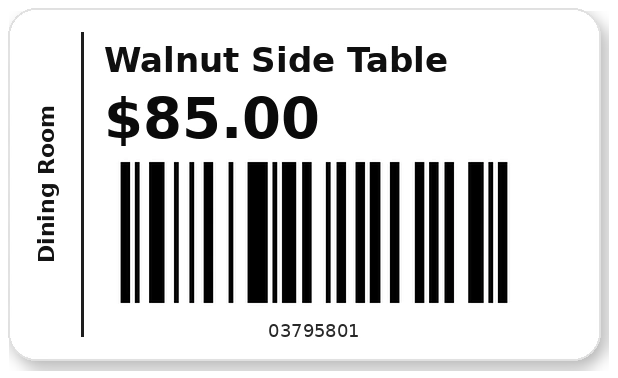
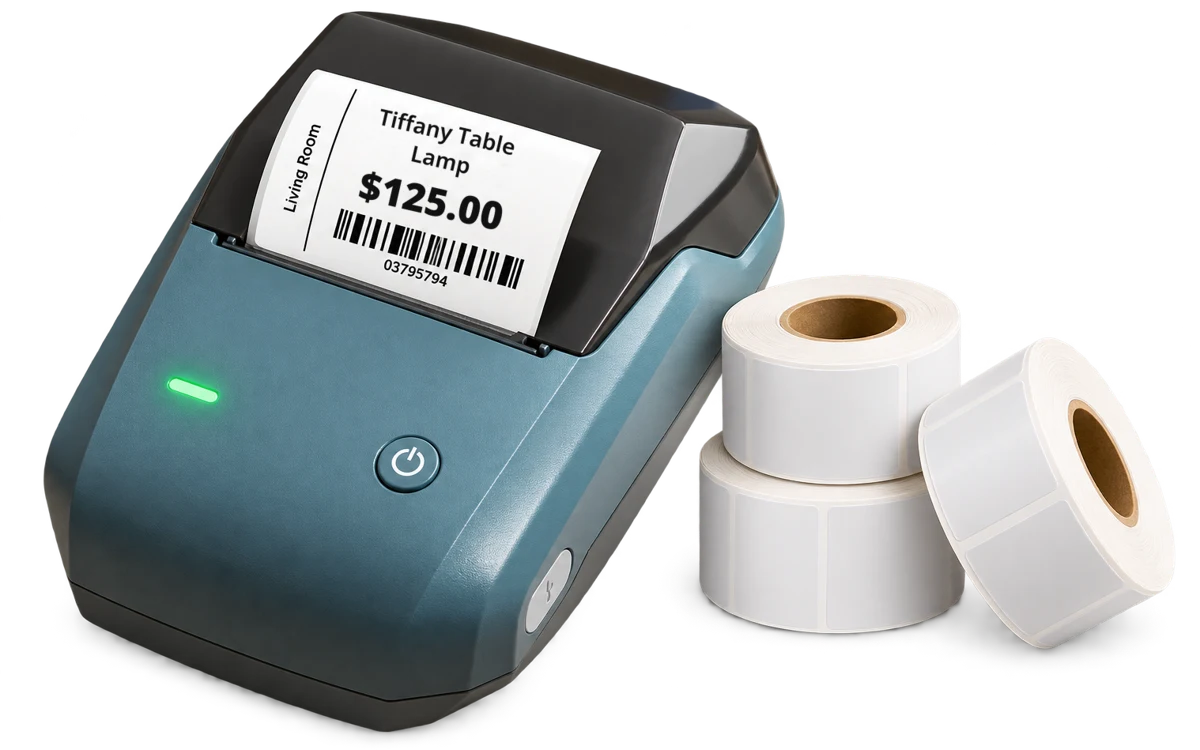
A label does three jobs. It tells the shopper the price, it tells the cashier what the item is, and it tells the family what sold. Handwritten tags and pricing gun stickers only do the first one, and they are easy to swap.

  • Use barcode labels with the title and price printed big enough to read without glasses.
  • Stick labels on the bottom of glass, china and anything with a finish you might damage. Skip old paper, records and leather.
  • Use fold over tags for jewelry, and string tags for baskets and anything a sticker will not hold.
  • Large furniture can go without a label as long as checkout can find it by name.
Run it in EstateSail

Accept an item and a barcode label prints with the title, price and room. Reprint one in seconds when a tag goes missing. Pricing guns vs barcode labels.

07
Opening morning

Manage the line

The first hour of the first day is your busiest and your riskiest. Early birds arrive before dawn, and an unclear system turns into arguments at the door. Decide how the line works and publish it with your ad.

  • Give out numbers in arrival order and let people in by number.
  • Cap how many shoppers are inside at once, and keep a staff member at the door.
  • Offer appointment time slots for gated communities or small homes.
  • Collect an email or phone number at check-in so you can invite people back.
The line, live on every phone.
Every check-in can join your buyer list.
Run it in EstateSail

Shoppers check in from a link or QR code, get a queue number, and your crew scans them in at the door. Estate sale check-in.

08
Showtime

Run the sale days

Put a staff member in every busy room, keep valuables by the register, and run checkout like a store. On the first morning, two registers pay for themselves. Ring every item, take every common payment type, and move paid pieces to the sold area right away.

A common discount schedule

Most companies hold full price on day one, then step prices down so the house clears by the last day. Post the schedule at the door so shoppers know when to come back.

Day one Full price
Day two 25 percent off
Day three 50 percent off
Last hours Offers and bulk deals

Protect the sale

  • Watch for swapped or missing tags. A barcode tied to the item makes a swap easy to spot.
  • Never leave cash unattended. Count the drawer at the end of each day.
  • Write down holds and paid items with a name, so nothing leaves twice.
Run it in EstateSail

Scan labels with the phone camera, park a cart while a buyer runs to the car, turn on a discount for the whole day, and take Tap to Pay on iPhone with Square or Stripe. The sale day checklist.

09
Clear the house

After the doors close

Very few houses sell out completely, so plan for what is left before the sale starts. The family should know the options and the costs ahead of time.

  • Sell it online. List what is left for a few more days, with pickup or shipping.
  • A buyout. A dealer makes one offer for the remaining contents.
  • Donate. Arrange a charity pickup and give the family the donation receipt.
  • Cleanout. Haul away the rest and leave the house broom clean for the realtor.
Run it in EstateSail

Keep the sale online after the house closes, as Buy It Now or an auction, using the photos and prices you already have. Hybrid estate sales.

10
The part families remember

Settle with the family

The settlement is your report card. Families, realtors and probate attorneys judge you by how clear it is and how fast it arrives. Send it within a day or two of closing.

  • Gross sales, by day and by payment method.
  • Deductions: your commission, card fees, labor, cleanout and hauling.
  • The net paid to the estate, and when the check goes out.
  • An itemized list of what sold and for how much, plus what did not sell and where it went.

An itemized list turns a skeptical family into a referral. It is the clearest proof that every piece was accounted for.

85.4%

Sell-through on the sample sale above: 1,096 of 1,284 items sold, right in the report.

Estate sale settlements

Run it in EstateSail

The client settlement fills in from checkout: gross, card fees, your commission and the deductions you enter, ending on the estate's net. Export the itemized list as a PDF or CSV. How to write a settlement report.

Get started

Three easy ways to get started.

Your first sale on EstateSail is free, and the Starter Kit ships free too.

Free Starter Kit

Print your first label the day it arrives.

  • NIIMBOT B1 wireless label printer, yours to keep
  • Three rolls of labels, including jewelry labels
  • Your first sale on EstateSail, free
  • Free shipping, no credit card
Claim your free Starter Kit

Or text or call (318) 724-5877. One kit per company.

Watch the walkthrough

See a full sale, start to finish.

AI inventory and pricing, labels, the check-in line, checkout, online listings and the report, in one video.

Watch by chapter
Book a free demo

Get a free 25-minute walkthrough.

Pick a time, and our team sets up your account and trains your crew.

Book a free demo

Save this

The estate sale checklist

  1. Walk every room and decide if the house is worth taking.
  2. Sign a contract with the commission, fees, dates and payout terms.
  3. Remove or mark everything the family is keeping.
  4. Stage each room like a department of a store.
  5. Inventory and price everything above your threshold. Post a price list for the rest.
  6. Print and stick barcode labels.
  7. Photograph the best pieces and advertise a week or more ahead.
  8. Publish how the line works, then run check-in at the door.
  9. Check out fast, follow the discount schedule, and protect the sale.
  10. Sell, donate or clear what is left, then send the itemized settlement.

Questions

Running an estate sale: FAQ

How do you run an estate sale?

Walk the house and sign a contract with the family, stage the rooms like a store, inventory and price what is worth labeling, advertise the dates, manage the line on opening day, check out buyers with a clear discount schedule, clear out what is left, and send the family an itemized settlement.

How long does it take to prepare for an estate sale?

Most professional companies stage, inventory, price and label a house over a few days, then open for two to four days. Large or packed homes take longer. Photo inventory with AI and barcode labels shorten the setup the most.

How do estate sale companies get paid?

Most estate sale companies take a commission, a percentage of the gross sales. Many also deduct agreed costs such as labor, cleanout and hauling, and some set a minimum. Everything is written into the contract and shown on the settlement.

Do you have to price every item at an estate sale?

No. Most companies inventory and label items above a set value and put low priced smalls on a standard price list. Those items are added at checkout so they still appear in the sales report.

What happens to items that do not sell at an estate sale?

They can be sold online for a few more days, bought out by a dealer, donated with a receipt for the family, or hauled away in a cleanout. Agree on the plan and its costs in the contract.

What software do estate sale companies use?

Modern estate sale companies use estate sale software that handles inventory, pricing, labels, check-in, checkout and the client settlement in one system. EstateSail is built for that, on iPhone, iPad and the web. See the best estate sale software for what to look for.

Run your next sale on EstateSail.

Every chapter of this guide, in one app. Book a free 25-minute walkthrough and your first sale is free, with setup and training included.